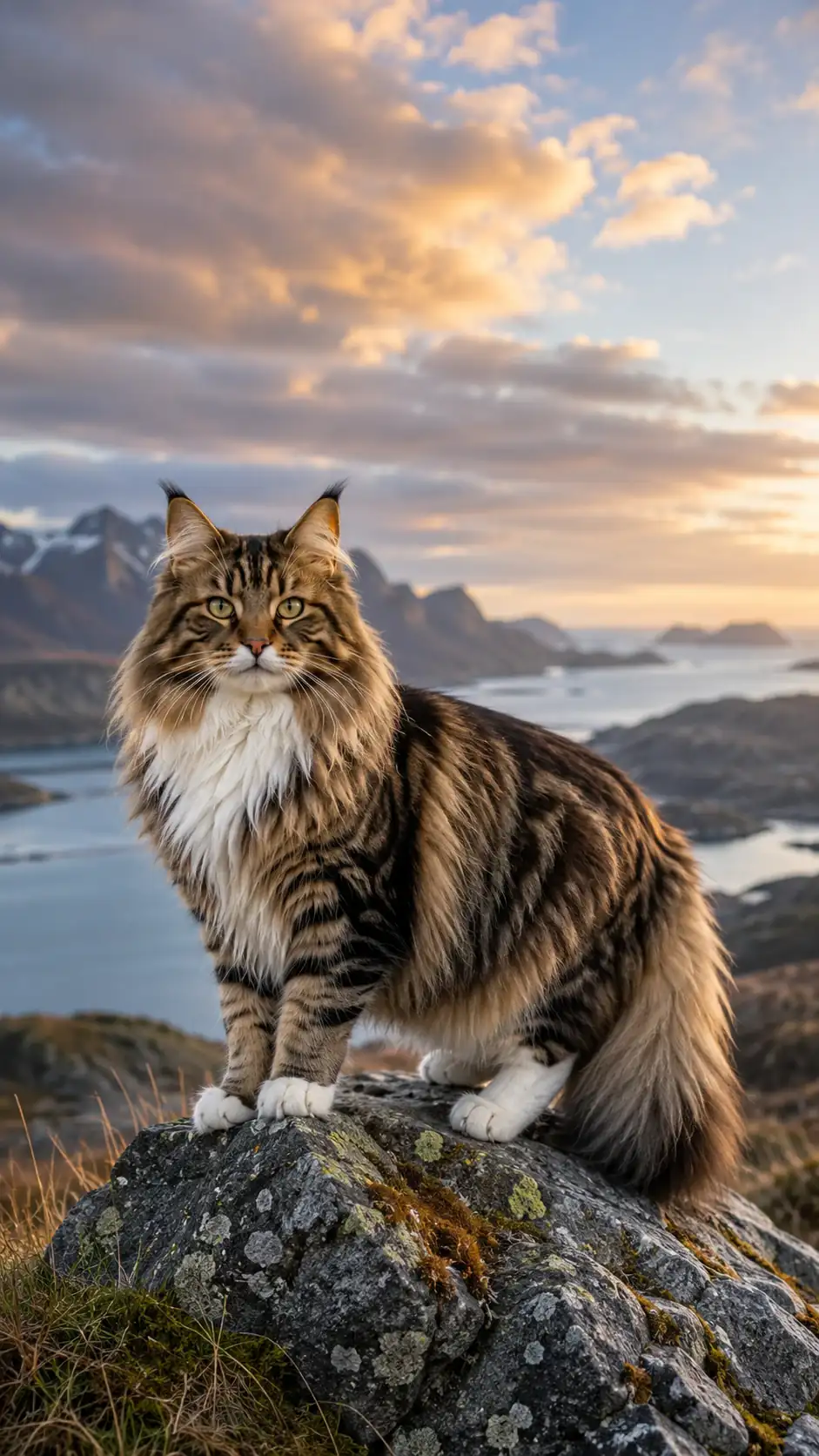

Far away in the snowy mountains of Norway lives a very special kitty. This is the Norwegian Forest Cat, a fluffy giant who loves the cold. With a thick coat of magic winter fur, this cat is built for adventure.
If you saw one, you might think it was a wild fairy-tale beast. They have long, bushy tails and extra tufts of hair on their ears. Their big paws are like built-in snowshoes that keep them from sinking into the deep white snow.
These cats are the absolute best tree climbers in the whole forest. They have super strong claws that let them scamper up the tallest pine trees in a blink. They can even climb down trees headfirst, which is a neat trick most cats cannot do.
Even though they look big and wild, they are actually sweet and gentle giants. After a long day of exploring the frosty woods, they love nothing more than coming inside. They will happily curl up right next to you and purr like a little warm motor.
A simple tale
Far away in the snowy mountains of Norway lives a very special kitty. This is the Norwegian Forest Cat, a fluffy giant who loves the cold. With a thick coat of magic winter fur, this cat is built for adventure.
If you saw one, you might think it was a wild fairy-tale beast. They have long, bushy tails and extra tufts of hair on their ears. Their big paws are like built-in snowshoes that keep them from sinking into the deep white snow.
These cats are the absolute best tree climbers in the whole forest. They have super strong claws that let them scamper up the tallest pine trees in a blink. They can even climb down trees headfirst, which is a neat trick most cats cannot do.
Even though they look big and wild, they are actually sweet and gentle giants. After a long day of exploring the frosty woods, they love nothing more than coming inside. They will happily curl up right next to you and purr like a little warm motor.
Quick facts
Origin
Norway
Size
large
Coat
long
Rarity
common
Hypoallergenic
No
The fuller history
Long before written records chronicled their existence, a robust feline roamed the dense, chilling forests of Norway. Adapted to survive brutal Scandinavian winters, these cats developed a dense, water-resistant double coat and a sturdy, muscular build. Natural selection favored the strongest and most resourceful hunters, shaping a breed that was perfectly equipped for the harsh Nordic climate.
Norse mythology spoke of large, majestic cats pulling the chariot of Freyja, the goddess of love and beauty. In reality, these formidable felines likely began their partnership with humans by serving as working mousers on Viking longships and remote Norwegian farms. Their exceptional hunting skills protected vital grain stores, earning them a respected place in early Scandinavian agricultural life.
Despite their long history, the skogkatt, or forest cat, nearly disappeared as a distinct breed during the twentieth century. As rural areas modernized and free-roaming domestic shorthairs intermingled with the native population, the unique traits of the forest cat began to heavily dilute. By the time enthusiasts realized the breed was fading, World War II further stalled any concerted preservation efforts.
In the decades following the war, dedicated Norwegian breeders launched a careful program to rescue their national treasure. They scoured the countryside for cats that still possessed the authentic heavy coat, tufted ears, and plumed tail of the ancient lineage. Their diligent work paid off when the breed was officially recognized by European registries in the late twentieth century, securing its survival.
Today, the Norwegian Forest Cat has journeyed far beyond the fjords and woodlands of its ancestors to become beloved worldwide. While they retain the wild, rugged appearance of a fierce hunter, they are deeply cherished for their gentle, even-tempered nature. They stand as a living testament to Norway's natural history, bridging the gap between ancient Viking lore and modern feline companionship.