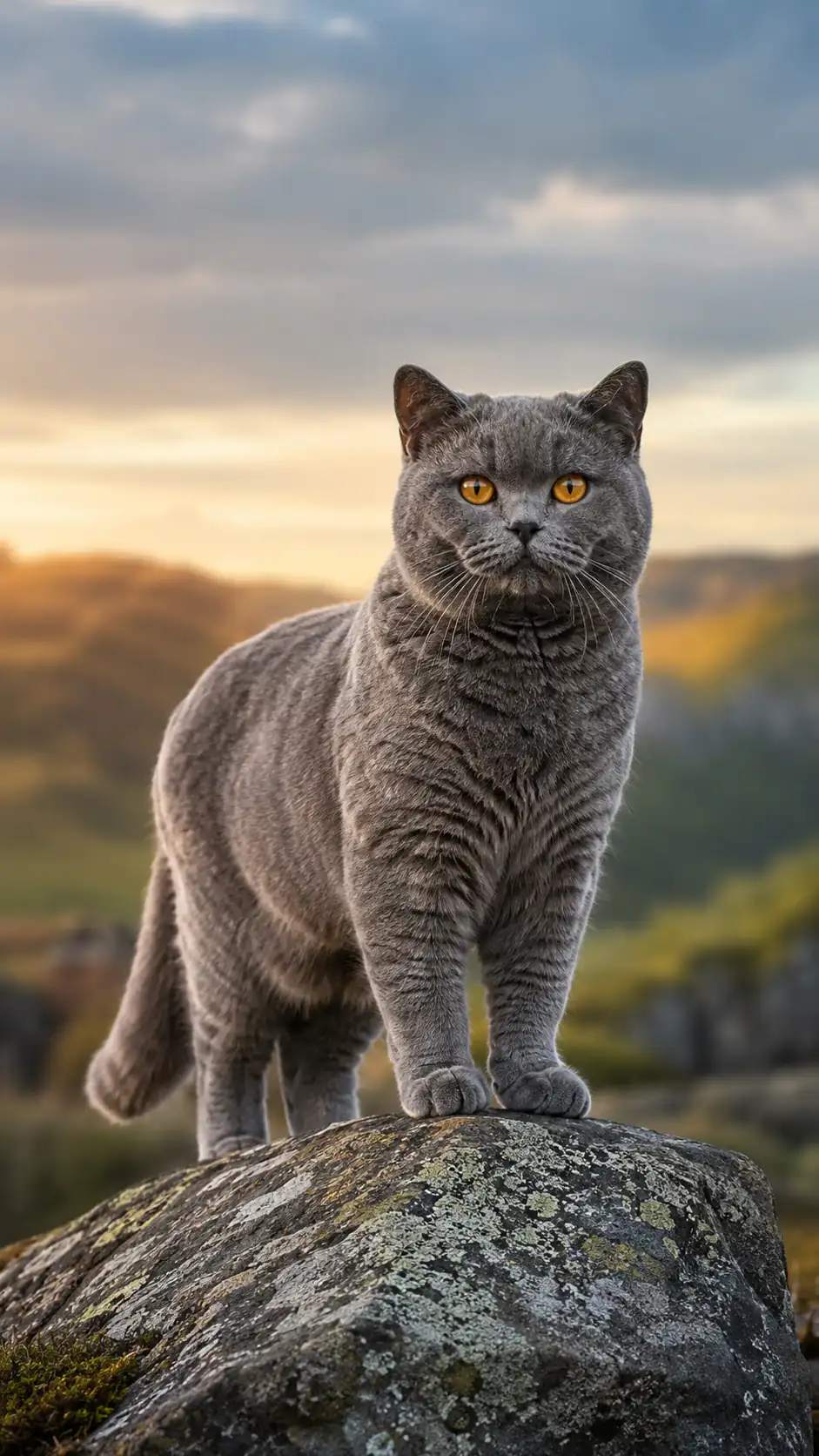

Long ago in the rainy United Kingdom, a very special cat hunted mice in barns and castles. This is the British Shorthair. It has a round face, big round eyes, and looks just like a cuddly teddy bear.
Its fur is thick and plush to keep the chilly European weather away. You might see them in many colors, but the most famous is a beautiful, dusty blue. If you pet one, it feels like touching a soft velvet pillow.
These chunky cats are very calm and quiet. They do not like to rush around or climb up the curtains like other pets. Instead, they prefer to sit quietly by the window and watch the world go by.
Even though they are sleepy and slow, they love their families very much. A British Shorthair will follow you from room to room just to see what you are doing. They are the perfect, purring friends for a cozy afternoon at home.
A simple tale
Long ago in the rainy United Kingdom, a very special cat hunted mice in barns and castles. This is the British Shorthair. It has a round face, big round eyes, and looks just like a cuddly teddy bear.
Its fur is thick and plush to keep the chilly European weather away. You might see them in many colors, but the most famous is a beautiful, dusty blue. If you pet one, it feels like touching a soft velvet pillow.
These chunky cats are very calm and quiet. They do not like to rush around or climb up the curtains like other pets. Instead, they prefer to sit quietly by the window and watch the world go by.
Even though they are sleepy and slow, they love their families very much. A British Shorthair will follow you from room to room just to see what you are doing. They are the perfect, purring friends for a cozy afternoon at home.
Quick facts
Origin
United Kingdom
Size
large
Coat
short
Rarity
common
Hypoallergenic
No
The fuller history
The story of the British Shorthair begins millennia ago with the expansion of the Roman Empire. When Roman legions pushed into the British Isles, they brought robust working cats to protect their camps and granaries from rodents. These ancient felines adapted to the damp, chilly climate of the islands, developing thick, dense coats and a sturdy, muscular build.
Over the centuries, these resilient cats became a fixture of British agricultural and urban life. They were prized not for their pedigrees, but for their unmatched hunting prowess in barns, streets, and homes. This rigorous natural selection forged a remarkably healthy and self-sufficient animal, characterized by a broad face and a calm, stoic demeanor.
The transformation from common street cat to celebrated breed occurred during the late nineteenth century. Harrison Weir, an ardent feline enthusiast and early pioneer of the cat fancy, began selectively breeding the finest examples of these native shorthairs. His efforts culminated in the breed's showcase at the first-ever organized cat show at London's Crystal Palace in 1871, where they garnered widespread admiration.
Despite their early popularity, the two World Wars devastated the breed's population, pushing the British Shorthair to the brink of extinction. Dedicated breeders sought to revitalize the dwindling bloodlines by carefully outcrossing the remaining stock with Persian cats. This strategic infusion not only saved the lineage but also enhanced their signature round appearance and softened their coats without losing their robust foundation.
Today, the British Shorthair is celebrated globally, recognized by its distinctively crisp, plush coat and thick build, most famously in the classic blue variety. From their humble origins as Roman pest controllers, they have steadily spread across Europe and the Americas as affectionate, easygoing companions. Their enduring legacy stands as a testament to careful preservation and the quiet resilience of a true working cat.